
Eco Art
WEAD (Women Eco Artists Dialog) is a critical online art and photo journal created by a network of feminist eco-artists, educators, curators and writers. The August issue of WEAD featured my thoughts on eco art, related to how I responded as an artist to worldwide nuclear concerns, and specifically the Fukushima reactor meltdown in 2011. (see more of my work in that series on my website.)
Below is the article, from WEAD’s August Newsletter:
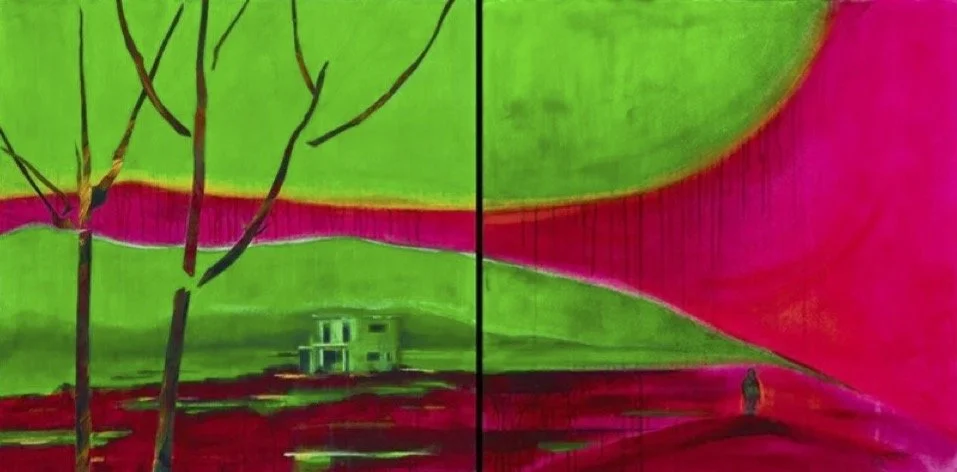
Fukushima’s Dead Landscape, mixed media on canvas, diptych: each 24” x 24”
For many years, my artwork has explored humanity's relationship with the Earth — our extraction of its resources, the pollution of its air and water, and the environmental consequences of our actions. In 2011, the triple reactor meltdown at the Japanese Fukushima Daiichi Nuclear Power Plant due to a tsunami and earthquake profoundly expanded that focus. It became clear to me that, beyond the challenges of climate change and fossil fuel pollution, humanity had also created a technology capable of releasing immense amounts of radioactive contamination with consequences that can endure for generations.
Compelled to better understand this invisible force, I began studying the science of nuclear energy. Nuclear power is generated through the process of nuclear fission, in which uranium atoms are split, releasing tremendous amounts of energy. While this process can produce electricity without direct carbon emissions, accidents such as Fukushima reveal the extraordinary engineering, environmental, and human challenges that can occur when radioactive materials escape containment.
The Fukushima disaster inspired a series of paintings I then did that sought to make the invisible visible. Radiation cannot be seen, touched, or smelled, yet its effects can alter landscapes, ecosystems, and human lives for decades. Through color, texture, and abstraction, I attempted to express both the physical reality of radioactive contamination and the emotional landscape of uncertainty, loss, and resilience.
My painting, Fukushima Dead Landscape, marked the culmination of this body of work. I incorporated fluorescent pigments and collage in the series to evoke the unseen presence of radiation. The glowing surfaces suggest energy that is both captivating and unsettling—a force that cannot be perceived directly yet profoundly shapes the world around us. My goal is not simply to document a nuclear disaster, but to invite reflection on our relationship with science, technology, responsibility, and the fragile systems that sustain life.
Keep in mind that the environmental recovery of Fukushima remains one of the most complex engineering efforts ever undertaken with cleanup expected to continue for decades. The persistence of radioactive contamination raises difficult scientific, environmental, and ethical questions that remain unresolved today.
As my research deepened, so did my artistic journey about the topic. After the challenging painting of this harrowing disaster, I turned my attention to the source of nuclear energy itself—the atom. Paintings of uranium ore became, for me, visual meditations on the beginning of the nuclear story: ordinary-looking rocks containing extraordinary energy. This exploration naturally led me to another chapter in nuclear history—the Radium Girls, the young women who unknowingly suffered fatal radiation exposure while painting luminous watch dials in the early twentieth century. Their story reminds us that scientific discovery, when pursued without adequate understanding or protection, can carry profound human costs. In a way, I am hoping that one of the effects of art creating might help people feel something they really do not want to feel. Art can bring you home to your inner questioning self.
In creativity,
Mary Lou Dauray
You are invited to an evening of reflection and discussion about nuclear power at the California Sausalito Library on October 9 from 6 - 7:30 pm.
Featured that night will be some of Mary Lou’s Fukushima art; scientific insights regarding nuclear power from expert Linda Pentz Gunter, author of the recently published ‘No to Nuclear’; and Chase Enright, Ploughshares Foundation Relations Officer.